UMA Manipulation in Polymarket Trump-Xi Call Market: Resolution Risks Exposed
Dive into how UMA voters flipped Trump-Xi March call odds from 17¢ to 95¢ despite Chinese denials—prediction market analysis uncovers patterns threatening market integrity.

UMA Manipulation in Polymarket Trump-Xi Call Market: Resolution Risks Exposed
Could a single whale trader hijack Polymarket's Trump-Xi call market resolution? This prediction market analysis uncovers how UMA token concentration enabled manipulation, shaking the foundations of probability markets. By the end, you'll master the UMA Optimistic Oracle mechanics, dissect the Trump-Xi manipulation step-by-step, interpret market odds insights for manipulation signals, grasp integrity risks, and deploy strategies to protect your prediction market trades.
What Was the Trump-Xi Call Market All About?
Polymarket has become the go-to spot for prediction markets. People bet crypto on real-world stuff there. The Trump-Xi call market blew up in early 2025. Traders put money on whether Donald Trump and Xi Jinping would hop on a phone call by a set deadline. It tapped right into the buzz around U.S.-China tensions.
Trading volume hit $197,808, per Polymarket's own data. Odds swung wild with every rumor or news drop, reflecting uncertainty as the deadline approached. But resolving it? That depended on Polymarket's oracle setup, and boy, did that stir trouble.
The resolution sparked disputes among bettors. Polymarket boasts a 94% accuracy rate overall, according to ForkLog. So this mess stuck out like a sore thumb. It laid bare how decentralized checks can crack under pressure.
Think about it. High-dollar bets on yes-or-no questions need rock-solid endings. But decentralized systems? They come with weak spots.
How Does the UMA Optimistic Oracle Actually Work in Prediction Markets?
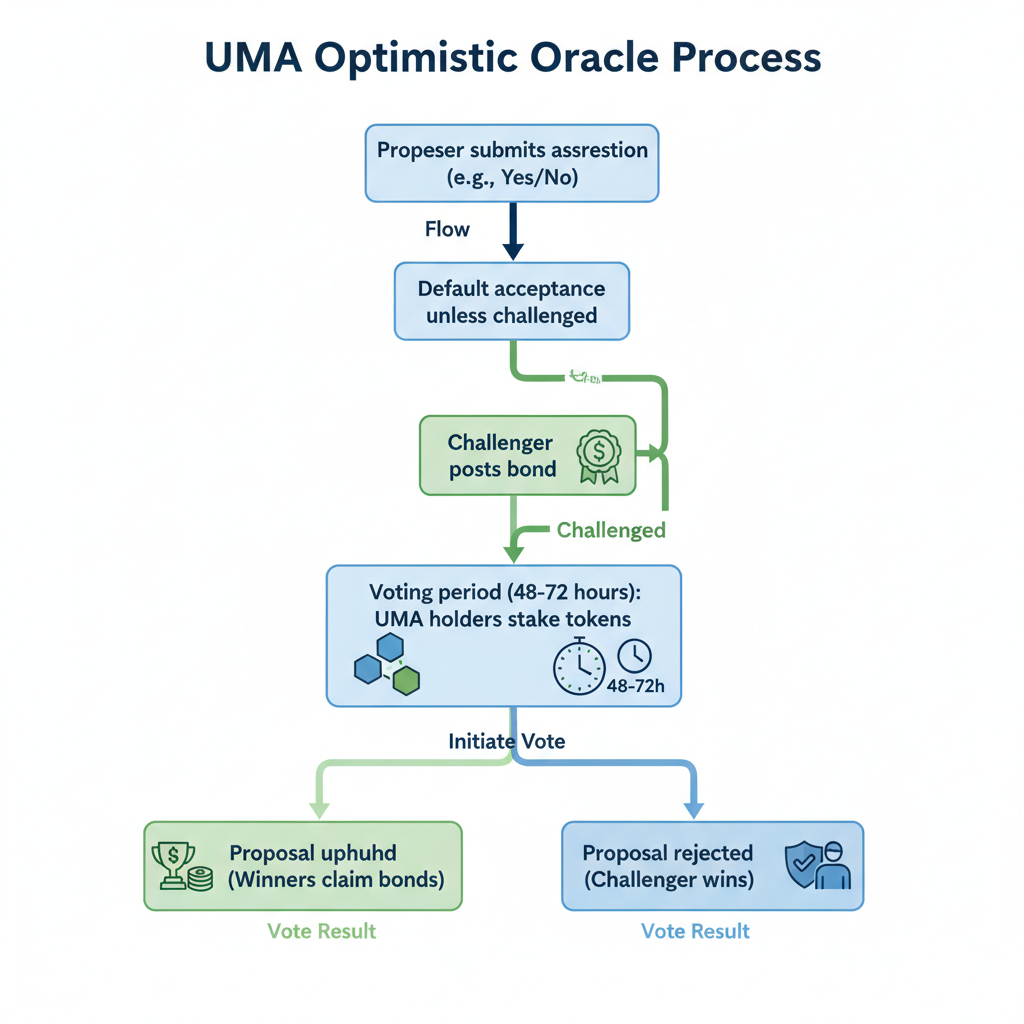
UMA's Optimistic Oracle runs the show for resolutions on Polymarket. No middlemen. Just incentives. It takes a proposer's word as truth by default, say "Yes" for event bets. Anyone can challenge by putting up a bond. That kicks off a vote with UMA token holders staking to decide.
Voting power ties to how many tokens you hold. Concentration is key here. In the Trump-Xi drama, one whale controlled 5 million UMA across three wallets. That's 25% of the vote, ForkLog reported. Stakers pick sides. Winners grab the bonds and fees. Losers eat the loss.
Delays run 48-72 hours. Gives time to vote, but opens doors for team-ups. The setup bets on money talking over bosses calling shots. Smart, right? Except big holders tip the scale. Low turnout? Even easier. Costs keep randos out, but whales shrug them off.
Grasp this, and the Trump-Xi blowup makes sense. Default trust clashed with whale muscle.
The Whale's Big Play: Trump-Xi Manipulation Step by Step
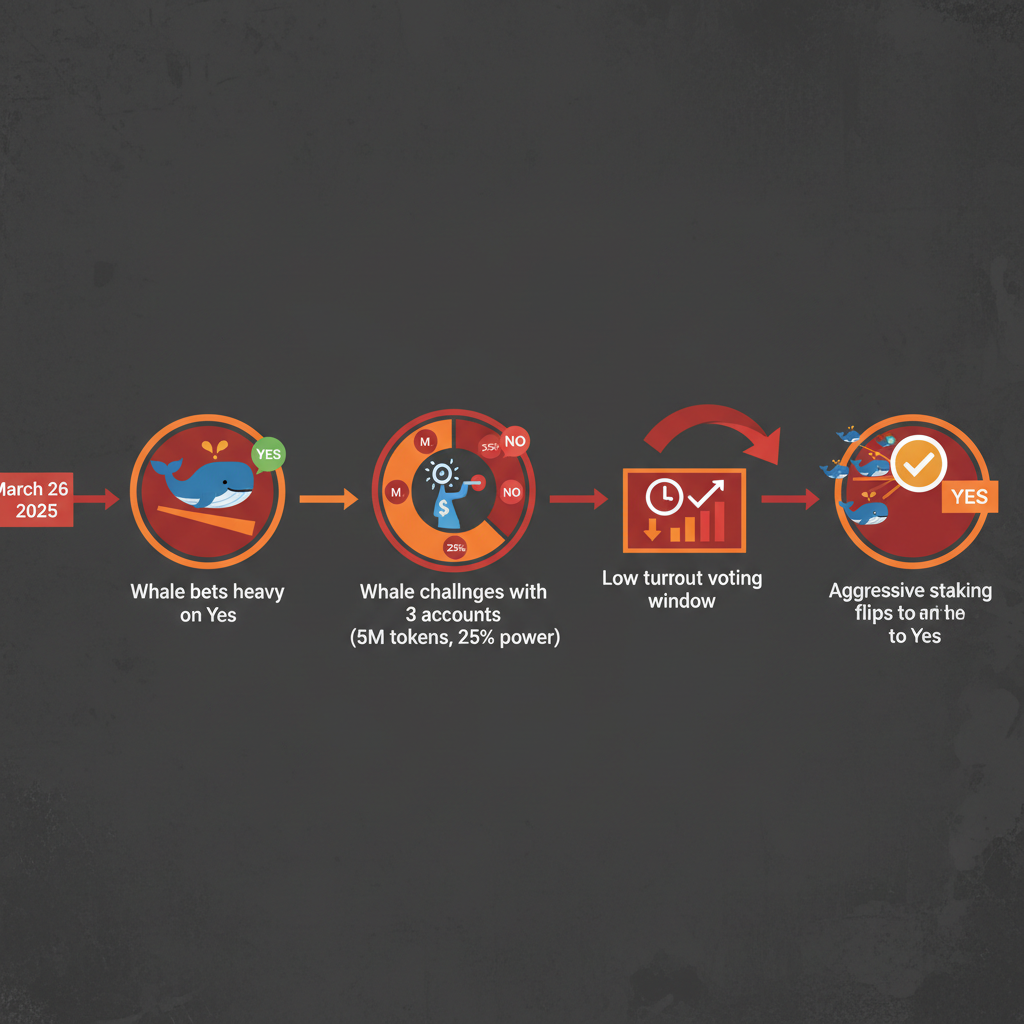
It all hit fever pitch March 26, 2025. Polymarket called it a governance attack, via The Block. Here's the play-by-play.
A large UMA token holder controlled 5 million tokens through three accounts, accounting for 25% of total votes (ForkLog). The whale cast significant votes to influence the market resolution in their favor, leading to an incorrect outcome.
ForkLog highlighted this as an example of token concentration risks. Polymarket acknowledged the governance attack but issued no refunds, as it wasn't considered a market failure (per The Block).
On-chain data reveals the whale's significant voting power. Transparency's great, until action stalls.
Spotting Manipulation: What the Odds and Volume Told Us
Market odds fluctuated, providing potential signals of unusual activity around the resolution.
The whale's wallets aligned with the voting outcome.
Stack it against Polymarket's 94% hit rate from ForkLog. Real disputes creep with news. This case highlighted oracle vulnerabilities.
Watch for these red flags in prediction market signals:
- Sudden volume jumps, no news.
- Lopsided liquidity.
- Linked accounts in trades or votes.
In probability markets, these hint at oracle trouble brewing.
Why This UMA Mess Hurts Prediction Market Integrity
Trust took a hit. UMA's token-vote setup puts cash over truth, say the critics. Small traders got burned. Whales cashed in. So much for decentralization dreams.
Polymarket's no-refund call, per The Block, shows rule holes. What's a "failure" anyway? Big bets crank the risk. One player tilting the field? Neutrality gone.
Reputation sting lingers. Growth stalls. Folks scout rivals. UMA trades around $0.39 lately, mirroring the skepticism. Fairness is everything. This flipped the script.
Deeper dive: Events like this echo past oracle fails. Remember Augur's growing pains? Same vibe. Platforms must evolve or watch users walk. Polymarket analysis shows the path: fix fast, communicate clear. Retail power depends on it.
Your Moves: Dodging UMA-Style Tricks in Prediction Markets
Platforms, mix it up. Pair UMA with multi-sig oracles, data feeds. Cuts single-failure risks. Token fixes: locks, stake caps. Quadratic voting evens the field.
You as trader? Set alerts for whale transfers on Etherscan. Pick markets with spread-out power. Hedge smart: link Trump-Xi to U.S.-China bundles.
High liquidity dilutes whales. Check disputes ASAP. Cross with news feeds. Trump-Xi teaches: act early.
Expand your toolkit. Build custom dashboards. Track UMA holder lists. Join discords for real-time chatter. Probability markets thrive on edge. Grab it.
This Polymarket analysis arms you for the Trump-Xi style traps. Spot UMA weak points. Read the signals. Push for better rules. Keep trading sharp in prediction markets. What's your next market?
Related Articles

Polymarket Combos Launch Quoter Rewards Program Details and Payouts

Polymarket Completes First Institutional Block Trade on AI Compute Contract

How Prediction Markets Spoiled Survivor 50 Winner on Kalshi Before Premiere