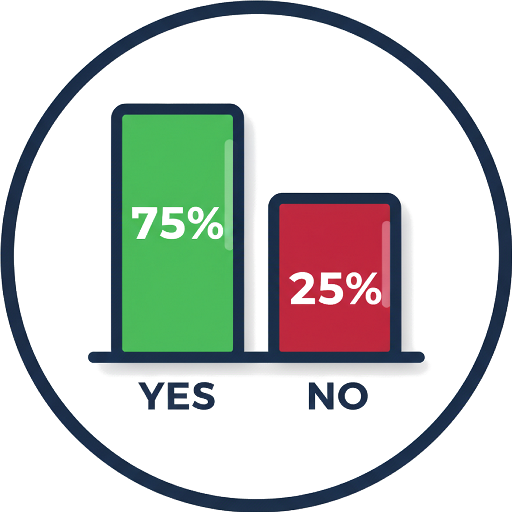
Polymarket Fake Volume Exposed: 25% Manipulation via Coordinated Wallets
AI uncovers 7 wallet clusters driving half of Polymarket profits—get market odds insights to spot and fade artificial price swings in prediction market analysis.

Polymarket Fake Volume Exposed: 25% Manipulation via Coordinated Wallets
A Columbia Business School analysis uncovered that about 25% of Polymarket's trading volume over three years came from fake wash trading. Peaks hit nearly 60% of weekly trades in December 2024. Is your prediction market strategy built on manipulated odds?
Stick with me, and you'll pick up solid Polymarket analysis insights. You'll learn to spot wash trading through coordinated wallets, decode real prediction market signals, and use AI prediction market analytics to trade probability markets with real confidence. No more getting burned by artificial swings.
What Is Wash Trading and Why Does It Mess with Prediction Markets?
Wash trading happens when the same parties buy and sell assets between accounts they control. No real risk, no net position, just pumped-up volume. It's illegal in the US because it erodes trust in markets.
Prediction markets like Polymarket count on volume to show how strongly traders feel about outcomes. High volume means lots of different people betting on elections, sports, whatever. It should refine those probabilities nicely. But wash trading throws a wrench in it. Fake trades pretend there's tons of liquidity, nudging odds away from what people actually think. You chase those signals and buy high, sell low when the truth hits.
Think about election markets. Real buzz builds from polls and headlines, giving you odds you can bank on. Wash trades fake that energy but add zero insight. Probabilities seem crisp, then crumble. Columbia researchers pointed out in their January 2025 study that platforms without ID checks and zero fees make this a breeze, just spin up wallet clusters.
You get hit twice. Bad entry prices first. Then whipsaws when real trades roll in. Plus, genuine liquidity gets drowned out. Spot it early, and you're the one riding the real waves.
Columbia Business School Study: About 25% Fake Volume on Polymarket
Columbia Business School dropped "Network-Based Detection of Wash Trading" on January 1, 2025. They dug into three years of Polymarket data and flagged roughly 25% of the volume as wash trading.
The peaks were brutal, nearly 60% of weekly trades looked suspicious in December 2024, especially in big markets. This ran from July 2024 through April 2025, messing with odds across the board.
In probability markets, this is huge. Thin markets look deep and liquid, sucking in bets on bogus signals. Elections and sports took the hardest hits on Polymarket. Traders saw pumps and thought, "crowd wisdom," only for real volume to rip those positions apart.
Polymarket's no-KYC, no-fee world makes it simple for one player to juggle wallets. Reports from CoinDesk pegged thousands of wallets in these schemes. Decrypt highlighted patterns in a notable chunk of Polymarket's total addresses.
The study used on-chain data to show how fake trades warped signals. For real traders, this is your filter for cutting through the crap and trading actual probabilities.
Coordinated Wallets: How They Pump Fake Activity
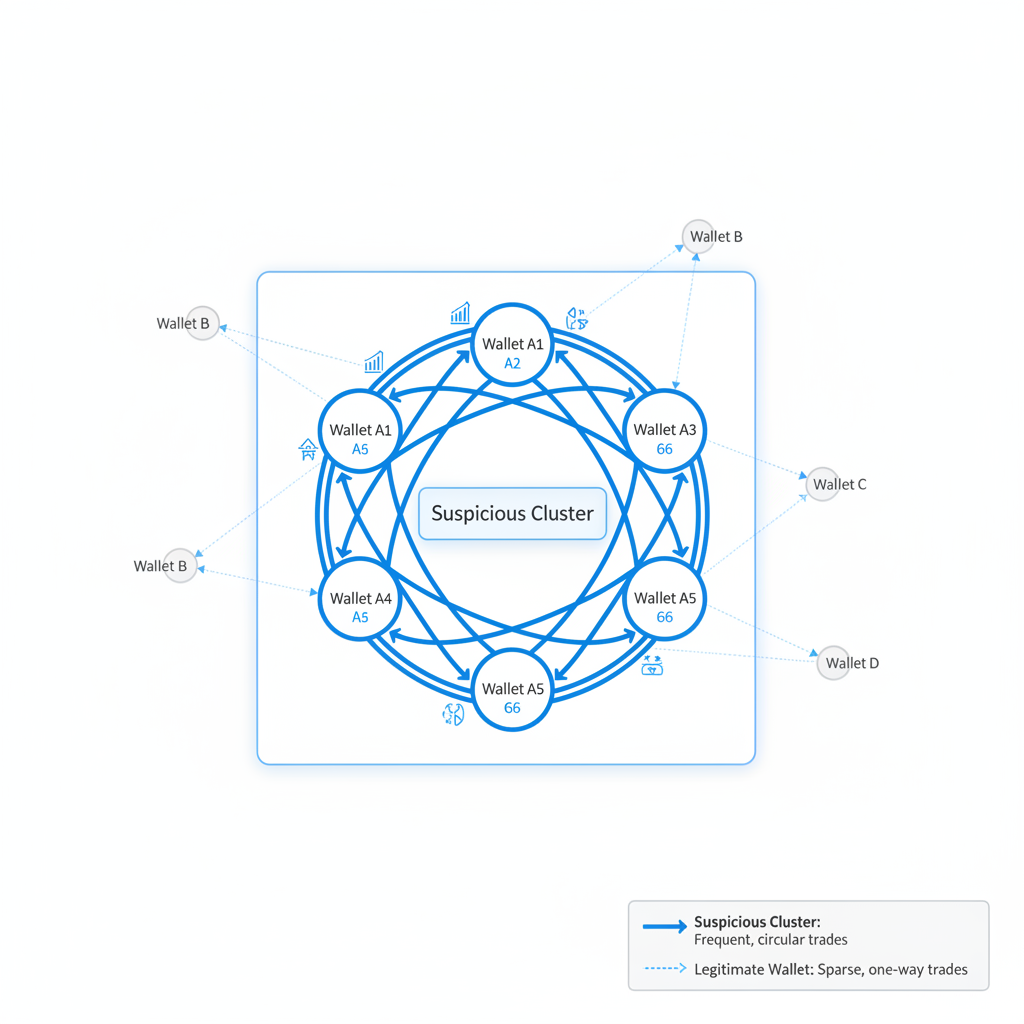
Coordinated wallets are the engine. Groups of addresses run by one person or crew. They trade in perfect sync, buy, sell the same contracts fast, spiking volume with zero net risk.
Spot them with graph analysis. Picture wallets as dots, trades as lines connecting them. Tight little cliques that barely touch outsiders? That's collusion. Add matching timing, sizes, patterns, and it's a slam dunk.
Late 2024 election markets saw this play out. A cluster loops trades on a candidate's contract every few minutes. Volume jumps, odds flicker, you jump in. They unwind flat, you're left exposed. Columbia's analysis uncovered thousands like this.
Reports noted over 90% suspicious trades in election and sports peaks. With a significant portion of Polymarket's wallets showing patterns, it's widespread. Anonymity and zero fees fuel it, from July 2024 to April 2025, averaging that 25% fake slice.
Know this, and sudden volume spikes scream "trap." Pumps from synced wallets? They fade fast.
How Did the Study Catch Wash Trading in Prediction Markets?
Columbia's team laid out a straightforward, iterative process using network graphs:
- Build the transaction graph. Every trade over three years links buyer and seller wallets.
- Run clustering algorithms. Groups wallets by patterns, nabbing clusters trading mostly internally. This nailed the clusters behind the average 25% wash volume.
- Check for anomalies. Rapid loops, bursts without news. December 2024 peaks hit nearly 60%, with election markets over 90% suspicious at times.
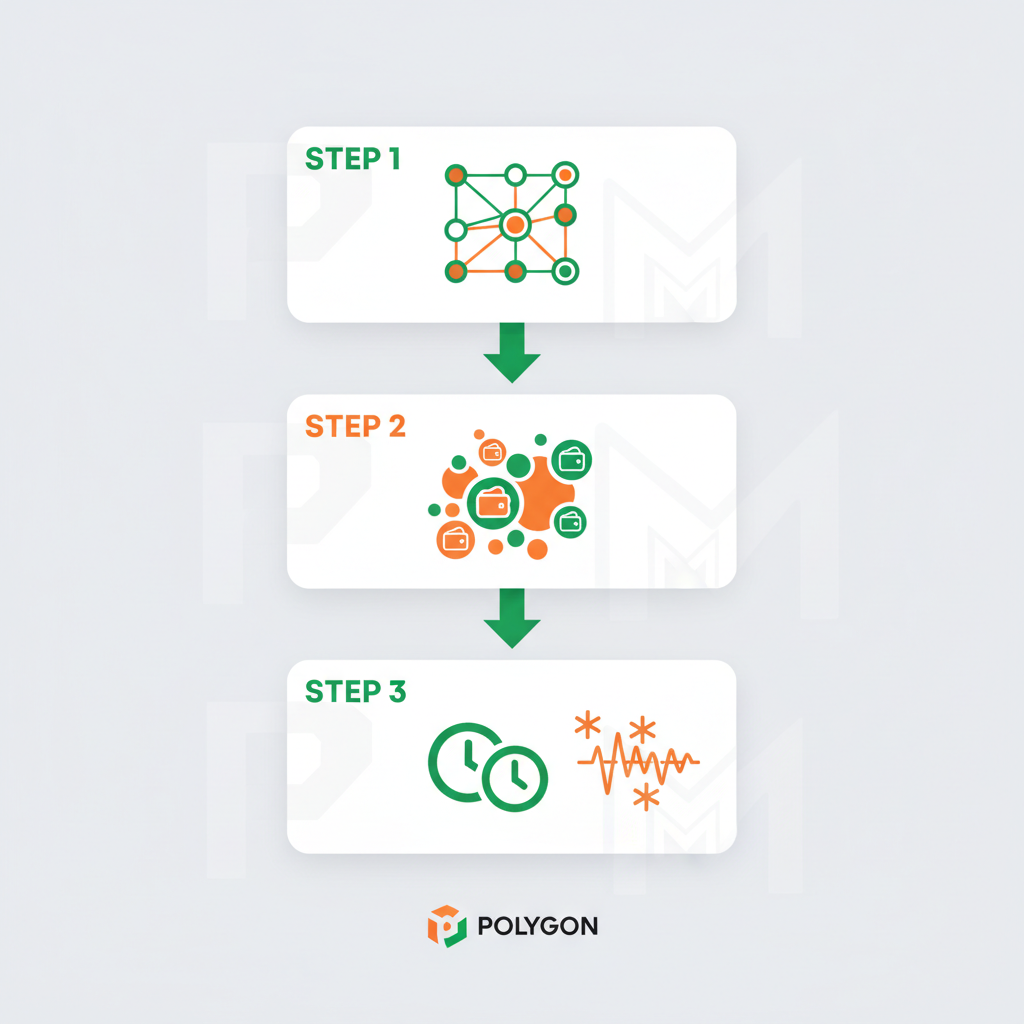
Thousands of wallets clustered up, tying to a good chunk of Polymarket's addresses. Data from July 2024 to April 2025.
This method reveals ties charts hide. You can start small: watch repeat partners and timing syncs. But for scale, you need tools. The study's a blueprint, on-chain forensics work on decentralized spots like Polymarket.
AI Prediction Market Analytics: Your Shield Against Fakes
AI takes this from hindsight to live defense. Tools scan for wash clusters, insiders, the works. They borrow clustering tricks from Columbia, crunching graphs on fresh data.
Why AI? It spots synced trades or cliques in seconds. Humans? Hours of staring. Machine learning hones in on patterns from those wallet hauls, cleaning odds on the fly.
Manual way: Gawk at leaderboards or volume bars, miss the web. AI sees the full map, catching December-style peaks instantly. On Polymarket, it hands you market odds insights, alerts before the swing.
During those July 2024-April 2025 spikes, AI would've lit up the fake inflation. Sure, subscriptions cost, but tune it right, and false alarms vanish. Mix with order book depth. Boom: Trust your signals, skip the traps.
Want deeper? Feed AI your watchlist markets. It cross-references with external data like polls or books, scoring signal strength. Imagine backtesting: Exclude flagged clusters, watch returns climb. That's AI prediction market analytics turning noise to edge.
Smart Strategies to Dodge Manipulation in Probability Markets
Now, put it to work. Here's how to sidestep the fakes:
- Verify volume on-chain. Hit Dune or Polymarket explorers for graphs. If it echoes Columbia's 25% benchmark, ease off.
- Stick to deep markets. Diverse traders, millions at stake. Skip thin ones ripe for 60% wash peaks. Broad elections beat niche bets.
- Run AI alerts. Live flags on clusters. Blend with polls, books, sentiment. During fake-heavy stretches, this saves you.
Pro tip: Hunt rapid loops, bail quick. Scale up after outside confirmation. Backtest sans suspects. Real winners chase authentic flow, ignore the hype.
Expand that: Layer in multi-platform checks. Polymarket odds plus Kalshi or PredictIt? Smoother signals. Track whale moves too, but filter coordinated ones first. Over time, build your anomaly baseline from quiet markets. What looks normal there? That's your bar.
This Polymarket analysis arms you with prediction market signals that hold up. Ditch the wash noise. Grab some AI prediction market analytics today. Trade probability markets on solid ground. Leave the manipulators in the dust.
Related Articles
Polymarket Origins Investigation Reveals TokenBnk Ties and Thiel DARPA Connections

World Cup 2026 Prediction Market Odds: France vs Morocco Positions on Polymarket

Kalshi Whale Sells $251K Brazil 2026 World Cup Contract at 93% Odds