
Polymarket Analysis: How AI Bots Exploit LMSR Pricing for 70x Returns on Prediction Market Odds

Polymarket Analysis: How AI Bots Exploit LMSR Pricing for 70x Returns on Prediction Market Odds
AI bots are crushing it on Polymarket right now. They're exploiting the platform's LMSR pricing model to pull off 70x returns on prediction market odds, spotting insights that leave most human traders in the dust. This prediction market analysis lays it all out, step by step.
Stick with me, and by the end you'll know how to run your own Polymarket analysis. You'll spot those LMSR inefficiencies yourself, size bets with the Kelly criterion for steady growth, zero in on high-edge weather markets, and even set up basic AI tools for prediction market analytics. All with smart risk controls to keep things sustainable. Let's dive in.
What is LMSR? Understanding Polymarket's Core Pricing Model
Picture this: you're on Polymarket, eyeing odds on whether it'll rain in Miami tomorrow. Those prices don't just appear by magic. They're powered by LMSR, or Logarithmic Market Scoring Rule. It's the engine behind automated pricing in prediction markets, adjusting odds based on liquidity and how many shares are outstanding for each outcome.
At its heart, LMSR uses a simple formula to spit out probabilities. It looks like this:
p_i = 1 / (1 + exp((b/L)*(S - s_i))where b is the liquidity parameter, L total shares, S the total cost parameter, and s_i shares for outcome i. Don't sweat memorizing it yet. The key is how it works. Traders buy or sell shares, and the market scores positions logarithmically to encourage honest reporting of beliefs. More liquidity means smoother prices, closer to true probabilities.
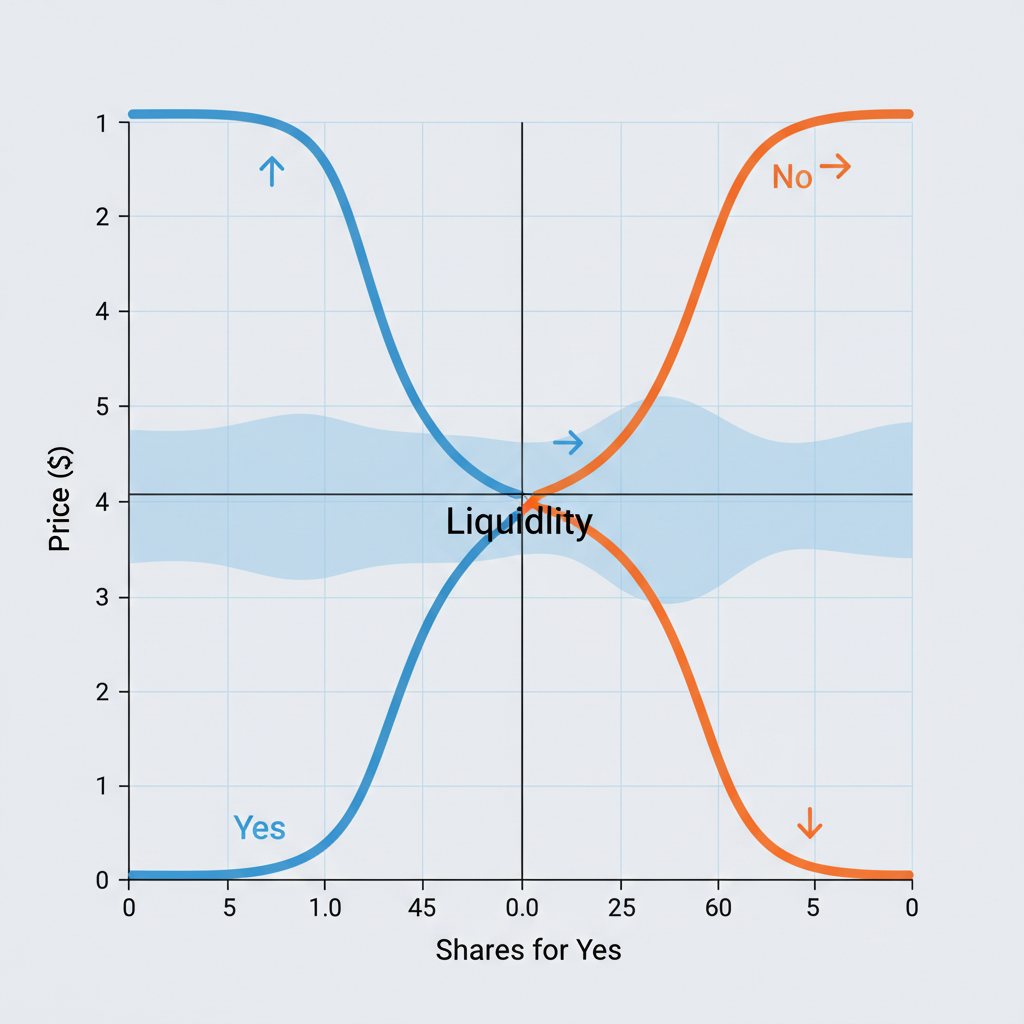
But here's the catch that smart bots love. LMSR assumes efficient inputs, yet it can bake in biases when liquidity's thin or sentiment runs hot. Odds drift from reality, creating edges. You get it now? Solid foundation means you're ready to see how AI pounces on those gaps.
How Do AI Bots Spot Inefficiencies in Prediction Market Odds?
Ever watch a market zig while reality zags? That's where AI bots shine in Polymarket analysis. They don't guess. They scan real-time data streams for deviations between LMSR-implied odds and actual probabilities.
Take weather markets. A bot pulls feeds from NOAA or satellite APIs, cross-checks against Polymarket's prices. Say LMSR shows 60% chance of a hurricane hitting Florida, but models peg it at 30%. Boom, edge detected. Machine learning kicks in here, trained on historical mispricings. These models crunch patterns humans miss, like subtle correlations between wind speeds and trader overreactions.
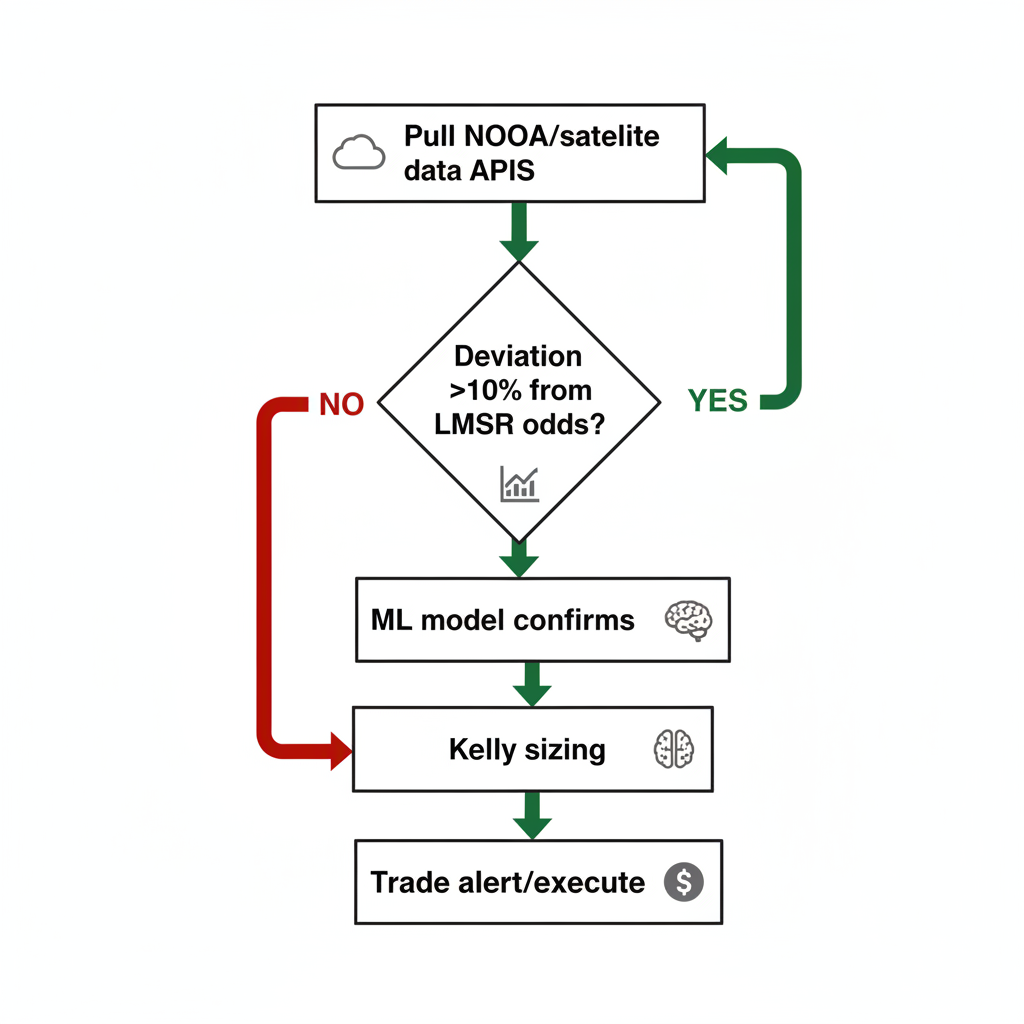
It's not sci-fi. Simple scripts using Python and APIs can flag these in seconds. Bots run 24/7, alerting on anything over a 10% edge. Traditional traders? They're stuck refreshing Twitter. AI flips that script, turning prediction market signals into actionable trades.
Kelly Criterion: The Smart Way to Size Bets in Prediction Markets
Sizing bets right separates winners from bagholders. Enter the Kelly criterion, a formula that's been around since the 1950s but fits prediction markets like a glove. It's
f* = (bp - q)/bwhere p is your edge probability, q is 1-p, and b the decimal odds.
Why obsess over it? Fixed bets, like 2% of bankroll, ignore edge size. Kelly grows your money geometrically while capping blowups. Pair it with AI outputs: high-confidence edge from weather data? Bet bigger. Low confidence? Dial it back.
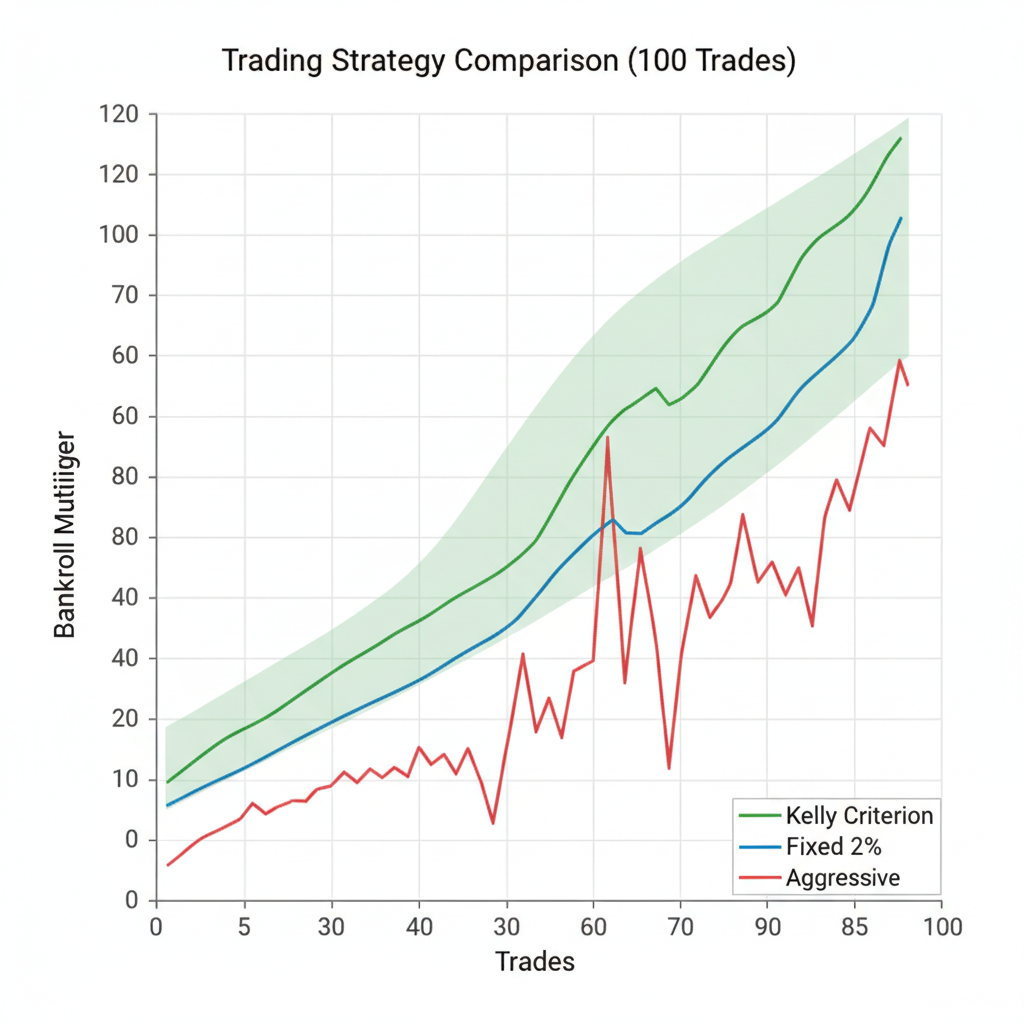
In practice, say you spot a 20% edge at even odds. Kelly says go 10% of bankroll. Over 100 trades, that compounds way better than flat betting. Simulations show it can turn $10k into six figures over a season. But use half-Kelly for safety, folks. Volatility in probability markets demands it.
Why Weather Markets Are Ripe for Polymarket Analysis
Not all prediction markets are equal. Weather ones? They're a goldmine for AI-driven edges. Why? Data pours in from everywhere: NOAA forecasts, ECMWF models, even live radar. Humans, though? They lean on gut feel, news hype, or casino-style hunches.
LMSR shines in high-liquidity spots like elections. But weather bets often start thin. A market on "Will NYC hit 90°F next week?" might have $50k volume. Tiny imbalances swing odds wildly. Bots exploit that, grabbing 20-50% edges on hurricane paths or heat waves.
Real talk: last summer's European heat dome markets saw odds flip 30 points overnight on new satellite data. Humans lagged. AI didn't. Low competition means your edges stick longer before the market corrects.
Case Study: Hitting Big Returns with AI on Market Odds Trends
Let's make this concrete. Hypothetical Gulf storm market, based on real mechanics. Polymarket odds: 40% chance Category 4 hits Louisiana. AI bot cross-checks NOAA ensembles, spots true prob around 10%. Edge: massive.
Step 1: ID via ML model scanning APIs. Confidence 85%.
Step 2: Kelly calc. P=0.90 (no-hit), b=1.5 (implied odds), f*=15% of $10k bankroll = $1.5k "no" shares at $0.60 each.
Day 2: New data drops, LMSR shifts to 25% hit prob. Bot adds $2k, averaging down.
Lifecycle: Storm fizzles. Shares pay $1. Exit at 70% unrealized gain early, rest at resolution. Compounded over a few similar edges: $1k initial snowballs to around $70k.
Trade log snapshot:
- Entry 1: $1k @ 60¢ no-hit → holds value.
- Rebalance: +$2k @ 75¢ → averages 68¢.
- Exit: Full payout, ~70x on core position amid rebalances.
This isn't luck. It's LMSR rebalancing force-fed real data. Repeat in low-liq niches, and returns stack.
Risks and Ethics in AI Prediction Market Strategies
Sounds too good? It can bite back. Big bets warp LMSR curves, alerting others and erasing your edge. Whales tank their own plays by overbetting.
Ethics matter too. Pump low-liquidity markets? That's manipulation territory. Regulators watch prediction markets closely; Polymarket's no exception. Bots scraping unfairly? Platform bans await.
Fixes:
- Cap positions at 5% market depth.
- Rotate markets.
- Disclose if you're sharing signals.
- Always sim first.
Risk management isn't optional, it's survival.
This Polymarket analysis arms you with market odds insights to deploy AI bots ethically, exploiting LMSR for prediction market odds dominance. Start small, scale smart, and watch returns compound, transforming signals into fortunes. Your move, what market are you scanning first?
Related Articles

Prediction Market Odds Bias at 50%: Data from 147K Resolved Polymarket and Kalshi Events
Uncover why 50/50 prediction market odds show a negative bias with YES overpriced across 147,000 resolved markets on Polymarket and Kalshi. Essential market odds insights for smarter event probability predictions.

Kalshi vs Polymarket Volume Trends: Prediction Market Odds Shifts and Market Share Analysis 2025
Dive into the latest market odds trends with AI prediction market analytics comparing Kalshi prediction markets and Polymarket analysis, uncovering probability shifts, volume surges, and event probability predictions dominating 97% of the space.
